
|
Overview
Pisa
is situated on the banks of the river Arno, on latitude 43o
43’ North and longitude 10o 23’ East in North-West Tuscany.
Just 80 km from Florence and 10 km from the sea, Pisa is a popular
touristic centre. This town is closely associated with the well-known
Leaning Tower.
The
climate, mild and temperate, because of the vicinity to the sea and the
protection offered by the mountains behind Pisa, has given it a primary
place in national and international tourism.
As
the fulcrum of an area astride the provinces of Lucca and Livorno, its
territory particularly suitable for farm-holidays, trekking, cycling,
horse-riding, bird watching, golf, open-air and water sports, that can be
practised on a fantastic coast with sand-beaches, perfectly equipped with
bathing establishments, hotels and restaurants. In the Regional Nature
Park of Migliarino - San Rossore - Massaciuccoli extending for 23,000
hectares along the coast from Viareggio to Livorno, with tree groves and
Mediterranean shrubs, encounters with deer, boars and the over two-hundred
verities of migratory birds are frequent. Pisa preserves, with the complex
of Piazza dei Miracoli – cultural patrimony of all humanity – numerous
masterpieces of civil and military architecture and of medieval history.
To
this treasures can be added the Certosa of Pisa, at Calci (10 km from
Pisa) and the Basilica of San Piero a Grado (5 Km from Pisa), obligatory
stop for lovers of Romanesque art.
Pisa’s
cultural and academic traditions boasts, besides the most ancient
botanical garden in all of Europe, a prestigious athenaeum flanked by the
Scuola Superiore di Studi Universitari Sant’Anna and the
Scuola
Normale Superiore, unique in Italy and instituted by Napoleon Bonaparte in
1813.
A
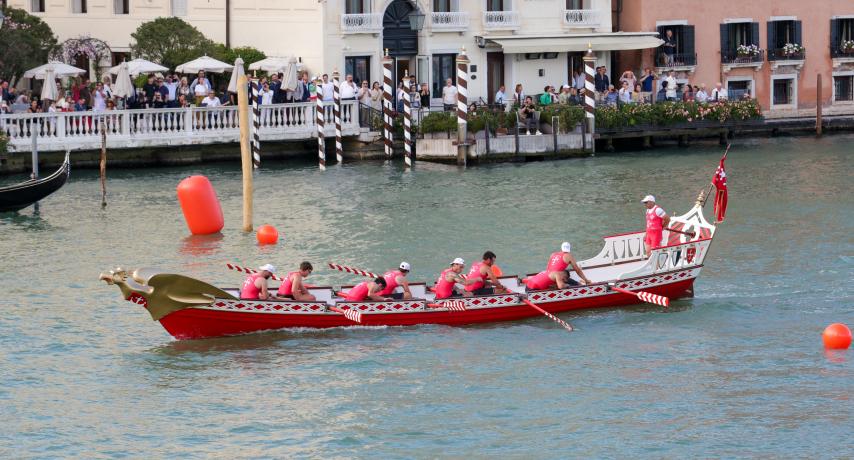
city of art and history, Pisa commemorates its traditions during the month
of June with numerous folklore and religious events, among which we draw
attention to the Luminara, in occasion of the feast of the patron Saint
(16 June), a suggestive decoration of the banks of the Arno River with wax
candles, and the Palio di San Ranieri, a regatta with special boats
through the historic parts of town.
On
the last Sunday in June, at the end of procession composed of over seven
hundred actors in historic costumes, the two opposite banks of the Arno,
organised in two opposing factions of six teams each, face each other,
pushing a heavy cart, and thus inaugurate the Game of the
Bridge, a
re-evocation of an ancient tournament game. |

|